Building India’s Marine Container Value Chain:
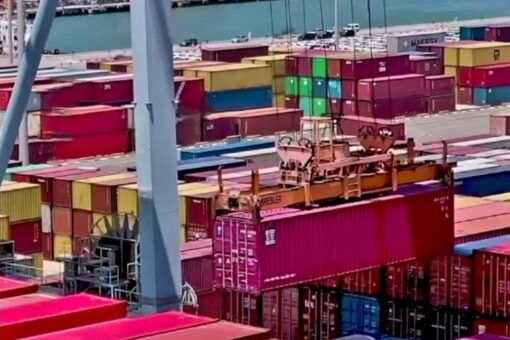
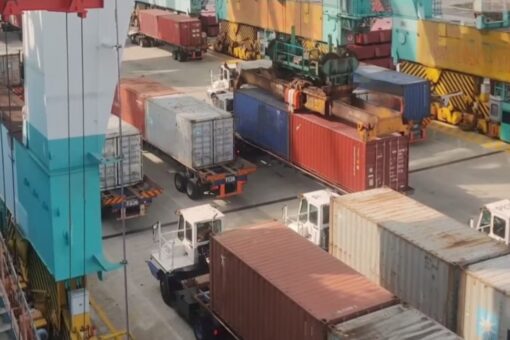
Container Standards, Logistics and Global Strategy Part 2 The study shows that all the containers will be going through a registry. The registry is adequately written on the side of the container as well as on the back of the container. The photographs that we have taken from the Baikampady region are attached to this. It is with a description and table that each container is identified. All the containers that are now manufactured in the world are called ISO containers, and the International Organization for Standardization is the issuer. The standards are available for between 50 francs and 70 francs, which are required to be paid for. Each container has long bolts and is capable of being handled well across all the regions of the world and at every port in the world. It is now common knowledge how containers can be stacked up to 5, 7, 8, or 9 high. I recommend that we invest in obtaining the standards, studying them in depth, and extrapolating that to the requirement of steel in connection with mild steel for nuts and bolts or stronger steel or equivalent. Empty containers will be described separately, and the positioning is that every available container, irrespective of size, should be capable of being assembled by Jindal/JSW from their own steel. The requirement would then be to have an ecological wooden bottom, which again is a possibility through strong marine plywood. Nowadays ECO containers are mentioned, which have traceability and are described as ECO containers. Then there are many containers like ventilated containers, open-top containers, and size-wise containers, but all have been standardised into 20-foot and 40-foot containers. Drawing enclosed, which is available from a diary or from the specifications. We can easily assemble a document called “Quality and Marine Containers” and work backwards on the question of least wastage and high sustainability. The finished price that would be invoiced will be based in Euros per container or Yen per container or Dollars per container or the lease cost. The total requirement of 3 million containers would take about 3 and a half years. Karnataka could therefore be the assembly hub for this, especially if there are deep differences in the pricing of Corten steel, which ideally there should not be. The pricing should be sufficient to be submitted to the Shipping Ministry, which is different from the Ministry of Ports. The discussion and dialogue with all the oligopolies will happen in Mangalore city if there is emphasis on the location aspect. Eventually, when the Hubli–Ankola line starts and deep bulk connections happen over the next 8 to 12 years, the possibilities of going to another 30 million tonnes of steel are very much on the anvil, not only in Karnataka but also in Orissa. The general presence should be in each port through its subsidiary so that it can do repositioning and positioning, but it would be more advantageous to be in inland ports which can be created. One such inland port can be in Bellary itself and in any part of northern Karnataka where land is not an issue. Therefore, the repositioning of containers for India as well as the world can become a noted fungible activity, for which we should create an intellectual position and prepare enough to say that Corten steel can be a viable throughput. To create competitive conditions, whether it is own production of the steel or whether it should be competitive enough that Corten steel can be ordered from China if it is cheaper and assembled in India, all options need to be considered. The Government of India is most likely to incentivise all aspects of container leasing through its flagship programme Sagarmala or equivalent. Jindal and JSW can then go into the supply chain for marine containers of 790 as well as 1170 small feeders.These can be assembled in Udupi district or in Mangalore district, South Karnataka district, or eventually in one berth or equivalent in Orissa, which can be a captive berth where shipbuilding can be organised for up to 450 small containers with the supply chain in India. Next to it can be the container repositioning system with stacking.Repositioning means bringing equilibrium between empty containers available for loading in a particular port, where they are immediately positioned to receive cargo. Here, a detailed study will be initiated in Mangalore on the question of how oligopolies handle containers, how lessors and lessees manage containers, and this can be in the form of crowdsourcing or specific-based studies. The Mangalore region has master mariners who are mostly not in containers, but one strategic aspect is that JSW can also own berths in Trincomalee dedicated to containers, with a backup area of 10,000 to 20,000, as Colombo has a history of congestion. The next positioning would be with the Willingdon Port and all the ports in India, where backup yards can be in the private sector or in the public sector, where empty containers can be positioned more efficiently with the use of Indian alacrity, mobility, or whatever it is called. The core position is that 3 million containers will create an automatic demand for 4.5 million tonnes over a 7-year period. The world equalisation plan or equilibrium plan can be brought into mind with the South-South dialogue, where feeder ships can quickly go from port to port based on leasing and ownership in Hambantota, which is the Sri Lankan port special economic zone, or Seychelles, which is now going to be India’s strategic location as an island nation. Then we have Mauritius, which has the southern Asia-Pacific headquarters of CMA CGM. Again, Durban has an Indian emotional connect, where two dedicated backup areas can get generated as a hub for positioning. Namibia can have a good backup area for empties, as Namibia has desert land, and probably the port of Mtwara, where there is huge potential and where land is provided by the Tanzanian government, which is very interesting for the next phase. Again, backing up into the country of Zambia, which is a landlocked nation, and Mali and Zimbabwe, all the relevant ports can become recipients of feeder vessels up to 700 containers with Indian ownership in the context of Indian lessors. We would be providing enough material for about a report of 180 pages with 20 chapters, and we can stick to text, while 100% mechanical engineering content will be in annexures in another 180 pages, which will include designs for mechanical engineering, which are very simple in terms of opening and closing of port doors, gaskets, and total study of containers. Jindals can invest less than 60 lakhs in a small compound within Mangalore for connecting to the port side and studies, and about 25 hectares where Jindal can effectively begin a land port. The reason is that there is an innovation possible regarding containers: steel exports to landlocked countries, whether in any form, such as empty bars or plates, do not occupy the full volume. Therefore, as merchants, our thinking would be that food items can be boxed and put into the 40-foot containers, as the total weight and volume taken would not exceed the requirement.It is intriguing that the JSW dealer will also be owning the land port inside Zambia, for instance, and the food will be taken off based on its best-before period, while the steel would remain there. Therefore, the port of Mtwara would be regularly receiving one sailing of 1,400 containers which will contain 18 tonnes of steel, but it will also contain about 8 to 12 tonnes of rice, puffed rice, jaggery, sugar, or anything equivalent, including pharmaceuticals. All these would be standardised in terms of cartons which will be specified, and therefore Mangalore will very easily become the stopping point for aggregation and disaggregation at respective ports in Africa, with Jindal as a brand that will go into steel. Other subsidiaries will also be dealing with exportable surpluses of clothing and construction material like cement, which can move along with this as small cargo without prejudice to the steel, which is fungible. So this is called innovation, as the freight element in break bulk versus containers can then get established, and profit would also be in transportation. The term logistics nowadays is described as a total service function from door to door. So it makes sense for Indian expertise, especially North Indian expertise, as employment is an issue, that the dealerships located at destinations can be managed remotely with the use of natural intelligence and artificial intelligence. Locals will then get employed, which will be highly emotionally gratifying, and expansion in employment will be possible in about 110 nations, which India will then connect through ports of reckoning without congestion. Through such channels, good business can be created on a friendly basis with Maldives, Seychelles, and islands around the world, where even barge-mounted containers can get delivered, and India would become a maritime nation. With collaboration from countries like Austria, New Zealand, and Japan, for instance, the island of Okinawa can connect to Korea for Indian goods and services associated with the marine sector.Notes- Containers have a lifecycle. – Perishable. – They need servicing, which means backward integration into the Bellary region for high-quality repairs and maintenance, which can be done along railway tracks and where labour turnover is easier to establish. This concludes the two-part series on India’s Marine Container Value Chain